Kostanzo Glogo Manor
Dead SoulsKostanzhoglo’s estate is a striking portrait of disciplined agricultural prosperity in the novel. Its substantial villages, serviceable equipment, fine-bred livestock, and working landscape embody an estate organized around production and oversight; the place gives physical form to Kostanzhoglo’s belief that care for the land and its labor can enrich both the household and the landowner’s moral life.
Landscape and Signs of Prosperity
The estate first appears almost town-like: huts stand in three tiers beneath three churches, with enormous hayricks and barns around them. The buildings are sturdy, the lanes orderly, and the wagons look serviceable and relatively new. The peasants seem intelligent, the cattle are of excellent stock, and even the pigs are described as aristocratic. Together, these details distinguish the estate’s prosperity from mere display: wealth is legible in the condition of its working infrastructure and animals.
The grounds are not arranged as a fashionable showpiece. There are no English-style gardens or ornamental parterres; instead, an open view runs from the manor to the farm buildings and workers’ cottages. The house is topped by a high lantern and superstructure, not for ornament or scenic contemplation, but so that work in distant fields can be supervised. The estate’s architecture thus expresses its governing principle: visibility serves management, and the household remains connected to the labor that sustains it.
House and Household
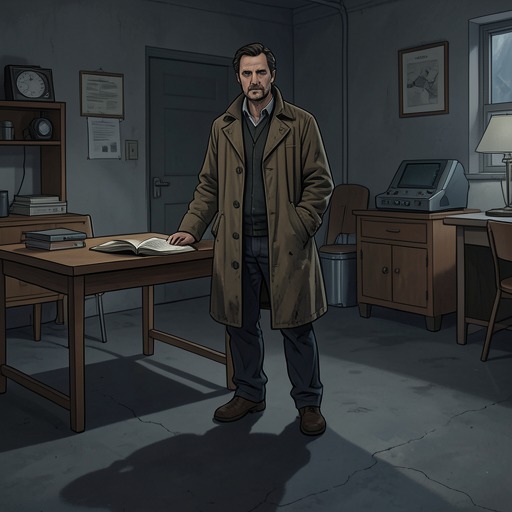
Chichikov expects the mansion’s interior to reveal its owner, but finds rooms that are simple and nearly bare. There are no pictures, books, bronzes, flowers, or decorative china. The absence of luxury is not evidence of idleness: it suggests that the proprietor spends much of his time outside the house, planning where work is being done and putting those plans into effect there. The only slight trace of a feminine hand is a scattering of flower petals laid out on drying boards across tables and chairs.
The estate’s active life is also reflected in its servants. They receive the visitors briskly on the verandah, in sharp contrast to Chichikov’s drunken servant Petrushka, though they wear plain blue homespun Cossack tunics rather than fashionable swallow-tailed coats. The contrast reinforces the estate’s rejection of appearance for its own sake: competence and activity matter more than polished dress.
Work, Credit, and Stewardship
The surrounding countryside makes the estate’s productive order especially clear. On the road to visit Khlobuev, the travelers first pass forest and cultivated land belonging to Platon and his brother-in-law, Kostanzhoglo; beyond their boundary, forest gives way to swamp and cultivated fields to waste. Khlobuev’s village appears deserted, a visual counterpoint to the abundance associated with Kostanzhoglo’s property.
Kostanzhoglo’s ideas about credit follow the same resistance to exploitation. Speaking with a factor, he rejects the role of a huckster who pressures indebted landowners to surrender mortgages at half price. He says that even if one of his loans remained unpaid for three years, he would not demand a kopeck of interest. His estate’s prosperity is therefore linked not only to effective production but also to a refusal to turn another landowner’s distress into an opportunity for profit.
The Estate as a Year-Round System
Kostanzhoglo describes estate work as an unbroken cycle shaped by the seasons. Before spring, the manager must prepare for sowing, apportion crops, measure and dry seed, and divide workers into teams. When the ice melts and the ground dries, spade, plough, and harrow begin their work in gardens and fields. He presents sowing as more than an investment in a private harvest: it puts food for millions into the earth.
Summer brings reaping, with rye, barley, oats, and wheat accumulating in sheaves and stocks. After the harvest, grain must be carted or stacked, winter stores prepared, and storehouses, kilns, and cattle sheds cleaned. Workers must be assigned tasks and the results counted. In winter, threshing continues; grain moves from barn to bin, mills and estate factories require attention, and workers’ cottages must be visited to see how the peasants are faring. The list makes the estate feel less like a static possession than a coordinated system whose success depends on continual observation and labor.
Narrative Significance
For Kostanzhoglo, this cycle makes country life the opposite of dullness. He argues that a landowner occupied by real work has no idle moment, and that the variety of agricultural tasks brings him into contact with nature, the seasons, and the processes of creation. The deepest reward, in his account, is not wealth alone: it is knowing that the growth and order of the estate have come through one’s own hands and attention.
The estate’s abundance also gives Chichikov a practical model for his own ambitions. He considers buying Khlobuev’s failing property, has ten thousand roubles available, and hopes to borrow a further fifteen thousand from Kostanzhoglo, who has offered help to someone genuinely seeking to become wealthy. The contrast between the prosperous, carefully managed domain and Khlobuev’s swamp-bordered, deserted one supplies the concrete background to that plan. The estate stands as an ideal of productive ownership, even as Chichikov approaches it chiefly as a means to acquire another property.